Harley Fuel Elbow Replacement
The stock Harley fuel elbow found on CV carburetors has long been known to be the achilles heel of this carb. The inlet is not only restrictive but made of molded plastic which breaks easily.
The plastic fuel inlet can crack and leak when removing the original crimp clamp or if over tightened. Also the manner in which the plastic elbow is formed onto a brass insert restricts flow.
If you have ever wanted to replace the fuel inlet and increase flow to your CV carburetor read on.
First note the position/angle of the elbow so that the replacement elbow may be installed in the same direction for routing the fuel hose.
In order to remove the original fuel inlet you must first break off the plastic molded elbow. Don't be shy, get out your favorite hammer or pliers and simply snap the plastic portion off of the carb. It is important to first note the angle/position of the original elbow so the fuel line is routed correctly when reinstalling a new elbow.
DO NOT REMOVE THE INLET FROM THE CARBURETOR USING DRILL OR VICE GRIPS.
This could damage the body or distort or broaden the hole where the new inlet presses into.
Once the plastic is removed only the brass inner portion of the elbow will remain. Some have had luck pulling this piece out with vise grips and brute strength, BUT DON'T! More often than not this only results in the brass piece spinning endlessly and wearing the hole to the point where the replacement fitting does not fit tight and requires a sealant. Below is listed the tools and technique for pulling the fuel elbow insert with ease.
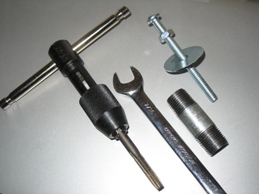
Basic tools required:
1. Wrench or pliers
2. 1/4"-20 thread tap
3. 1/4" x 3" long machine screw
4. 1/4"-20 nut
5. 1-1/4" fender washer (min 1/4" hole)
6. 3/8" x 2" pipe nipple or deep socket
7. Replacement inlet elbow.
The thread tap and machine screw can be found at any home improvement or hardware store.
CAUTION: Never Heat a Carburetor to Remove or Loosen Parts!
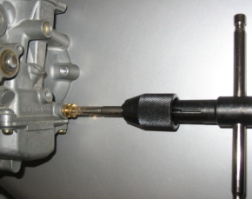
Using a 1/4"-20 tap and T-handle, insert and begin threading the tap clockwise into the brass stub tapping threads approximately 1/4" in. Tapping threads all the way through is not necessary as you only need enough for the screw to grab while pulling the old piece out. To prevent excess brass particles from falling back into the carburetor it is advised to hold the carb with the inlet piece facing down so that particles fall away rather than being pushed into the float bowl while tapping.
Remove all brass filings/particles after tapping and before continuing.
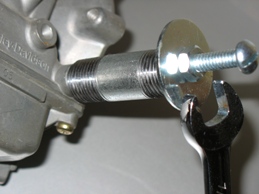
Assemble the puller. Place the pipe nipple (or deep socket) over the brass stub. Thread the nut onto the 3" screw up to the screw head, then pass the screw through the fender washer. Insert the screw/nut/washer assembly through the pipe nipple or deep socket and thread the screw end a few turns into the tapped brass piece. You only need to thread in enough to grab.
Remove the pipe nipple, it may be wedged onto the carburetor. Thoroughly clean the fuel insert passage to make sure it is free of any brass filings. Soapy water will wash away any fine particles and not harm the internal parts. Be sure the carburetor is clean and dry.
Installing the new fuel elbow will vary depending upon brand or type. Harley dealers sell both an OEM (plastic barb) and brass inlets that can be pressed in (arbor press or large vise). We recommend avoiding the OEM replacement inlet since they have the same plastic elbow that is prone to crack. Also worth avoiding (in our opinion) are brass inlets made from a 2-piece design, or the inlets that are merely repurposed brass plumbing fittings found on eBay. CV Performance recommends either thehigh flow CVP Fuel Max Inlet or our standard inlet elbow. Both are made from a single solid piece of brass which is leak-resistant and will not crack when tightening the hose clamp. Our standard inlet elbow has increased flow compared to stock while still accepting the stock 1/4" hose, while the Fuel Max Inlet and can improve flow by 40% and will accept a larger 5/16" fuel line.
Installing the new Fuel Inlet Elbow
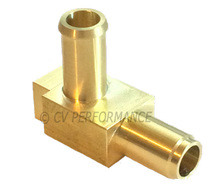
Position the inlet elbow in the same direction as the original so that the hose can be routed correctly. Repositioning or twisting the fitting after it is pressed in may weaken the fitment in the carburetor. The fitting must be pressed in but if you do not have access to a press then a large vice or large C clamp will do. Place a piece of wood on the opposite side of the carburetor body to protect it and use the jaws of the vice or press to slowly press fit the brass inlet elbow into the inlet bore. A very large C clamp can also work for this. If installing a solid brass CVP style inlet and a press or vice is not available simply tap the inlet into the carburetor with a small soft mallet. The CVP brand inlet has an extra thick block on the back side to protect the brass fitting from distorting during pressing in using this method. Be sure to place a piece of wood on the back side to prevent any damage to the carburetor body. The smooth end presses into the carb and the barbed end is meant to grip the fuel hose.
The brass inlet will self-seal when it is pressed in as long as the carburetor inlet passage hole is free of debris and not damaged, stretched, or distorted. A thin layer of blue locktite may be applied around the fitting to help seal, but care should be taken not to allow any to drip back into the fuel passage as it will damage the rubber tip on the float needle valve. These suggestions refer to the CVP brand brass Fuel Inlet however other brands may have different procedures.
Note that not all fuel inlets are the same. Some brands and imports are merely repurposed plumbing fittings while others have known issues for having an undersized spigot that leaks when pressed in, or an oversized spigot diameter that can potentially crack the carburetor body. Use only an original Harley Davidson brand inlet or our CVP Fuel Max Inlet or the standard Fuel Inlet for a guaranteed fit. Our CVP Fuel Max Inlet also has the advantage of increased flow and will accept a larger 5/16 fuel line when necessary.
Caution: while working on the carburetor or any fuel system, care should be taken to keep the carburetor or parts away from any open flame or heat source. NEVER try to loosen carburetor parts using heat. Do not use brute force or methods other than a puller as described.
Replacing the Harley fuel elbow can help guarantee a leak free carburetor, and if installing a hi-flow CVP Fuel Max Inlet also provide increased flow.
Consult your factory service manual for full instructions. Installer is responsible for following all safety precautions outlined in the factory service manual. The above described procedures are provided as a basic guide and assumes no liability for any damages or injury. Never work on a carburetor or related fuel system in the presence of an open flame or heat source. If unsure of any procedure please consult a trained motorcycle mechanic or other professional. Enjoy the Ride! |